From March 11 to 13, 2025, a Solidar Suisse delegation led by Mr. R. Dieudonné Zaongo, Country Representative, carried out an exchange mission with the beneficiaries of the Rilgré project in the communes of Méguet, Boulsa and Koupéla, with a view to assessing the level of appropriation of the approaches developed by the Rilgré project. In all the localities visited, the Country Representative had fruitful discussions with producers.
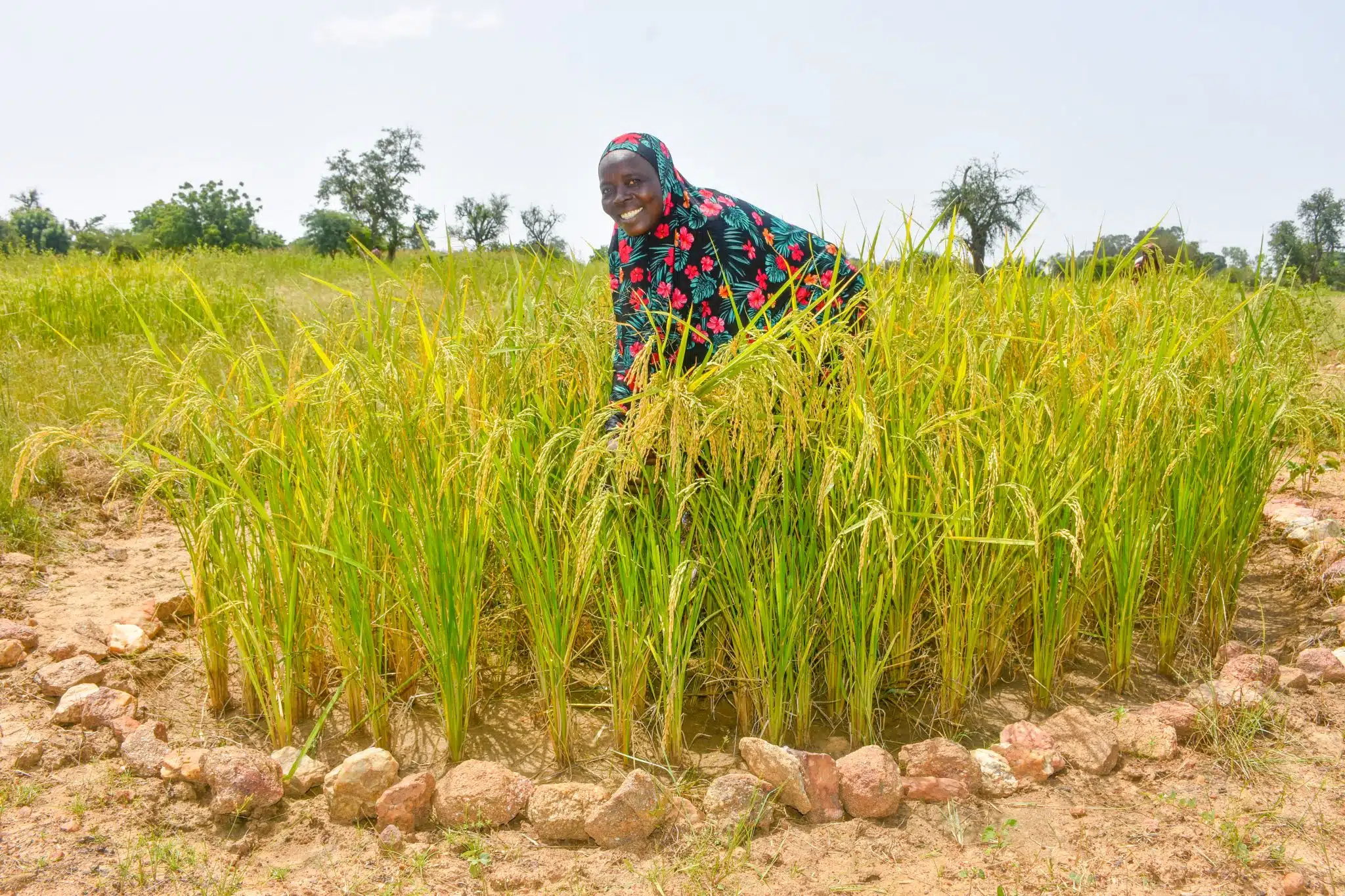
The mission began on March 11, 2025 at Fatimatenga in the commune of Méguet, where it held discussions with the producers of the rice basin developed by the Project. During the discussions, the producers mentioned that this was the first time the village had benefited from a rice basin, and that they had received training in agro-ecological techniques and rice production itineraries. In addition, they noted not only the advantages of using bio-inputs (bokashi, kolgezanga, super magro) in view of the agricultural yields achieved despite the pockets of drought recorded during the past winter season, but also their mastery of bio-input production techniques. The Country Representative praised the mobilization and commitment of the producers, who had facilitated the collection and transport of rubble for the construction of the basfond under the guidance of the monitoring and control office made available to them. He then spoke of the development of sustainable and inclusive value chains promoted by the project through support for simplified cooperative societies (SCOOPS) for the production of bio-inputs and the processing of agro-ecological products, and the need for producers to become involved in the various links in order to meet the requirements of contract farming. Lastly, he praised producers for taking ownership of the community-based approach through the CoRi, while reminding them of the CoRi’s role in providing local support to producers and monitoring activities to ensure the sustainability of the project’s results.
On March 12, 2025, in the commune of Boulsa, the Country Representative of Solidar Suisse held discussions with the producers of the rice-growing basfond in the village of Goungha and the members of the CoRi in the village of Koankoara. In Goungha, the producers, members of the Boulsa CoRi, expressed to the Country Representative their full satisfaction with the support they had received, in particular the training courses on agroecological techniques. Indeed, the farmers of the basfond used only bio-inputs in their plots (boksahi, kolgezanga and appichi), all of which contributed to a harvest yield of 6.240 tonnes of rice. Thanks to the project, they have organized themselves into SCOOPS for bio-input production and rice processing. In addition, the women have formed AVEC (Association villages d’épargne et de crédit), which will strengthen their economic power. In addition, growers reported that they had shared bio-input production techniques with other Goungha growers who were not members of CoRi. Producers also raised a number of concerns, notably the lack of a storage warehouse and the unorganized sale of rice. The Country Representative praised the Goungha basfond producers for taking ownership of the project’s approaches, and reassured them that their concerns would be taken into account in the SCOOPS subsidy mechanism.

Family photo with the CoRi de…
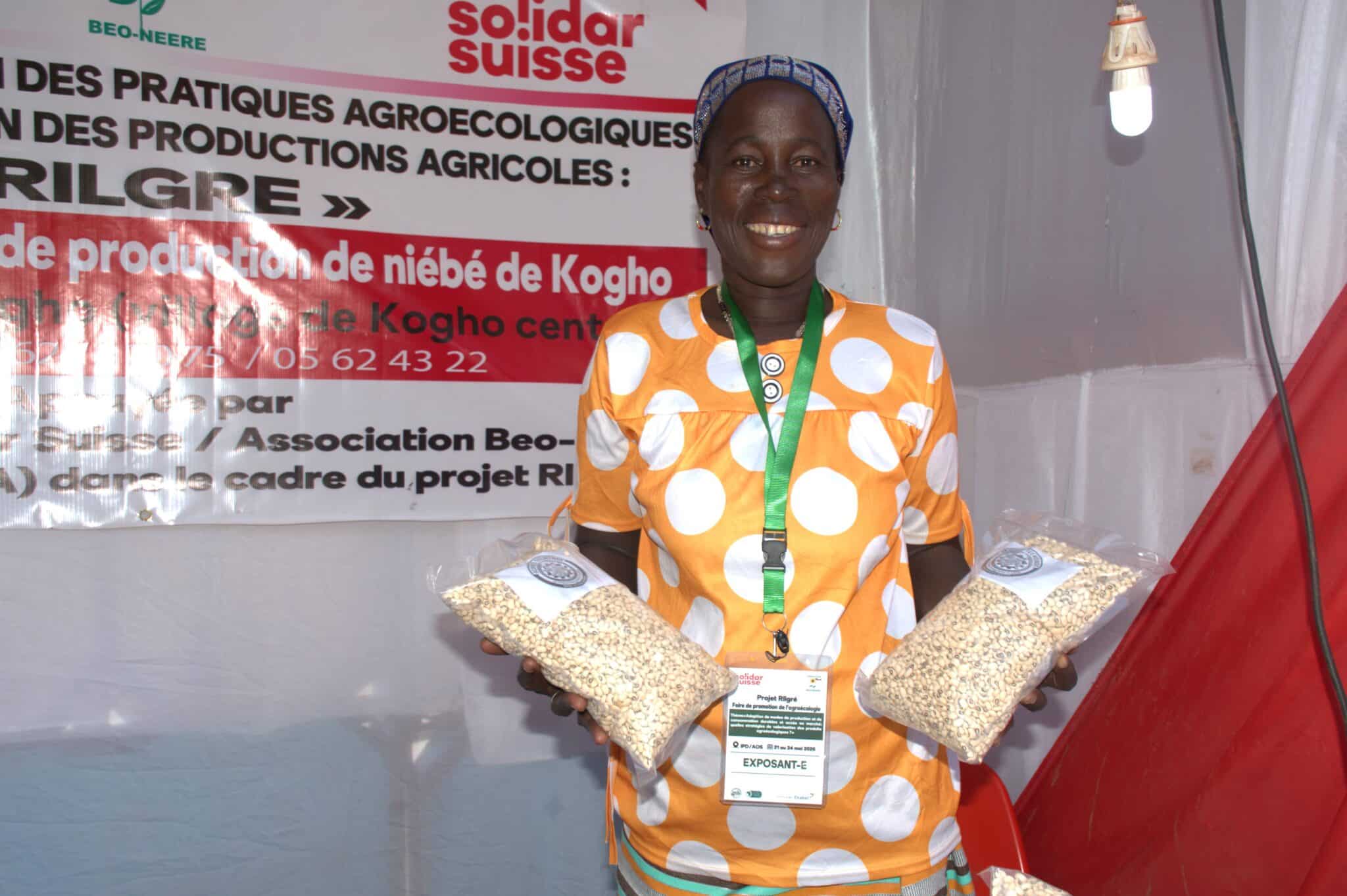
In Konkoara, enthusiastic producers welcomed the Country Representative and his delegation. Discussions focused on the adoption of agroecological techniques and the role of CoRi in providing local support to producers and monitoring activities to ensure the sustainability of project results. Producers expressed their full satisfaction with the benefits of applying bio-inputs in their fields, and confirmed their capacity to produce said bio-inputs. The CoRi leaders at village level recalled their role in popularizing agroecological techniques and providing local support to producers. They pointed out that the entire village of Konkoara had been affected by land reclamation and prevention techniques, and awareness-raising on the combination of CES/DRS techniques and bio-inputs. Women who own beolga farms testified to their satisfaction with the yields obtained following the use of bio-inputs, with proof of this by exhibiting two bags of peanuts, one from a field that had benefited from bio-inputs and the other from a field that had not. A number of difficulties were also discussed, notably the inadequacy of the material/equipment made available to the CoRi.
On March 13, 2025, the Country Representative met with members of the CoRi from the village of Tibin in the commune of Koupéla. The village of Tibin has benefited from the establishment of a school field that has enabled them to experiment with agroecological techniques in order to apply them in their individual fields. Producers noted the comparative advantage of applying agroecological techniques, and went on to declare that they had obtained 3 times higher yields than if they had not applied these techniques. The issue of land pressure was raised as a difficulty, hence the need for support in securing land.
After Tibin village, the Country Representative held discussions with CoRi’s Management Committee (CoGes) in the meeting room of Koupéla Town Hall. Discussions focused on CoRi’s role in the extension of agroecological techniques and the changes observed by producers following the application of these techniques. CoGEs members were satisfied with the project’s achievements in terms of the adoption of agroecological techniques by producers. The Country Representative expressed his appreciation of the adoption of agroecological techniques by producers, and encouraged them to stay the course to increase the achievement of expected results.
Following discussions with the CoGes, the Country Representative was received by Mr Moumouni Sagnon, President of the Special Delegation of the commune of Koupéla, who thanked the Rilgré project for the results achieved before renewing his commitment to support the project’s implementation.

Communities of agro-ecological practices known as “Communauté Rilgré (CoRi)” have been set up in the communes where the Rilgré project operates to provide ongoing awareness-raising and advisory support to smallholders on intensive production and practices based on agro-ecological practices. Made up of 200 members, with a 20-member management committee (CoGES) including 5 members of the technical core, the CoRi brings together producer organizations, women who own land known as “beolga” and socio-professional organizations of young people and women, IDPs and people living with disabilities who share common concerns in relation to agroecology, to enable them to consolidate their expertise and find sustainable solutions to their problems.