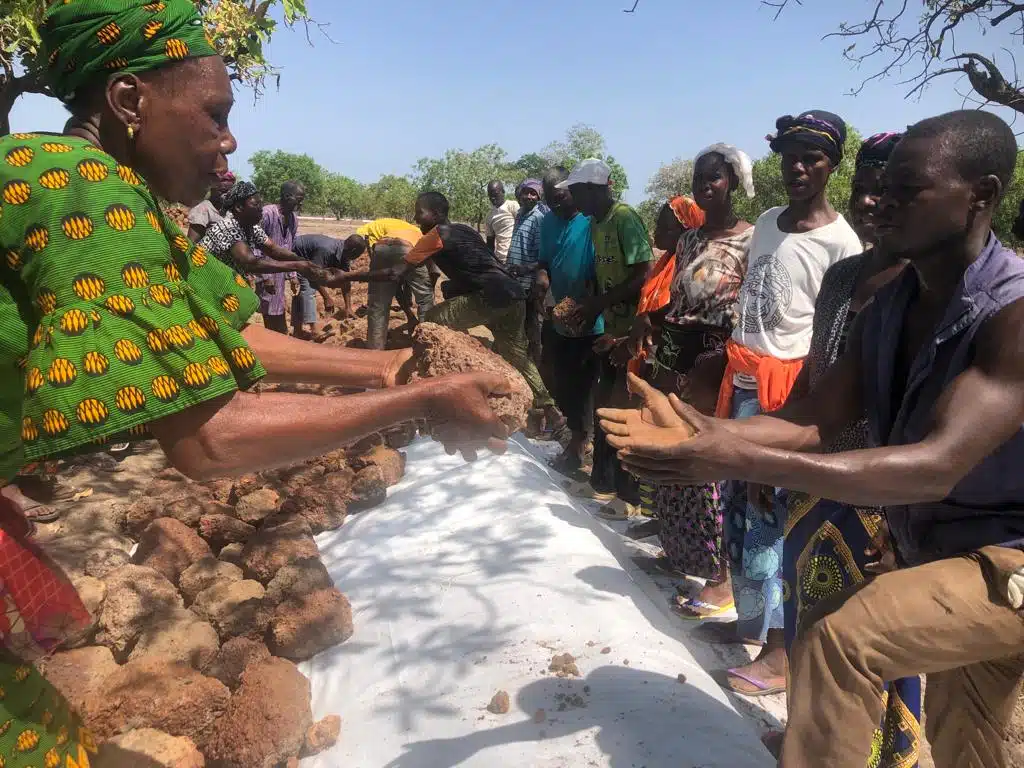
“Facilitating the early recovery of 3,000 shock-affected households, including 600 IDP households, through their access to resources to meet their needs”, is the objective of the early recovery activities implemented by the RESICOM project. To support these vulnerable populations (IDPs, very poor households), who have lost everything and need to recover quickly, they benefit from a package of quick-win activities in the short and medium term, enabling them to meet their basic food needs, their urgent needs and also other non-food needs. These activities include: high-intensity wage labor (HIMO), sheep fattening, income-generating activities (AGR), promotion of Infant and Young Child Feeding (ANJE), accompanied by the creation of nutritious gardens for pregnant women and mothers with children under the age of 05, and so on. After 04 years of implementation: 2,350 women are engaged in IGAs, 3,158 vulnerable women are engaged in sheep fattening, and 5,886 sensitized women have adopted good infant and young child feeding practices: exclusive breastfeeding for the first 6 months, the introduction of complementary foods (prepared from local foods, notably enriched infant flour) in addition to breastfeeding, and the frequency of baby feeding according to age.
As a reminder, infant and young child feeding is a key area for improving child survival and promoting healthy growth and development. The first 02 years of a child’s life are particularly important, as optimal nutrition during this period will reduce morbidity and mortality rates, as well as the risk of chronic diseases, and contribute to better overall development. According to WHO data, an estimated 2.7 million children die each year as a result of undernutrition, representing 45% of all child deaths. In Burkina Faso, according to national nutrition surveys, over one (01) million children under the age of 05 still suffer from chronic malnutrition.
To help change this situation, the RESICOM project is promoting ANJE by organizing awareness-raising sessions and demonstrations of the preparation of enriched porridge based on local products in its intervention zones, with the support of community-based health agents (ASBC) who have been strengthened beforehand, and the creation of nutritious gardens for pregnant women and mothers of children under the age of 05. In the nutritious gardens, various trees and vegetables are grown (baobab, moringa, tomatoes, eggplants, etc.) to prepare balanced meals for vulnerable households (including IDPs). Discover here, some of the beneficiaries who testify to the positive effects of this action.
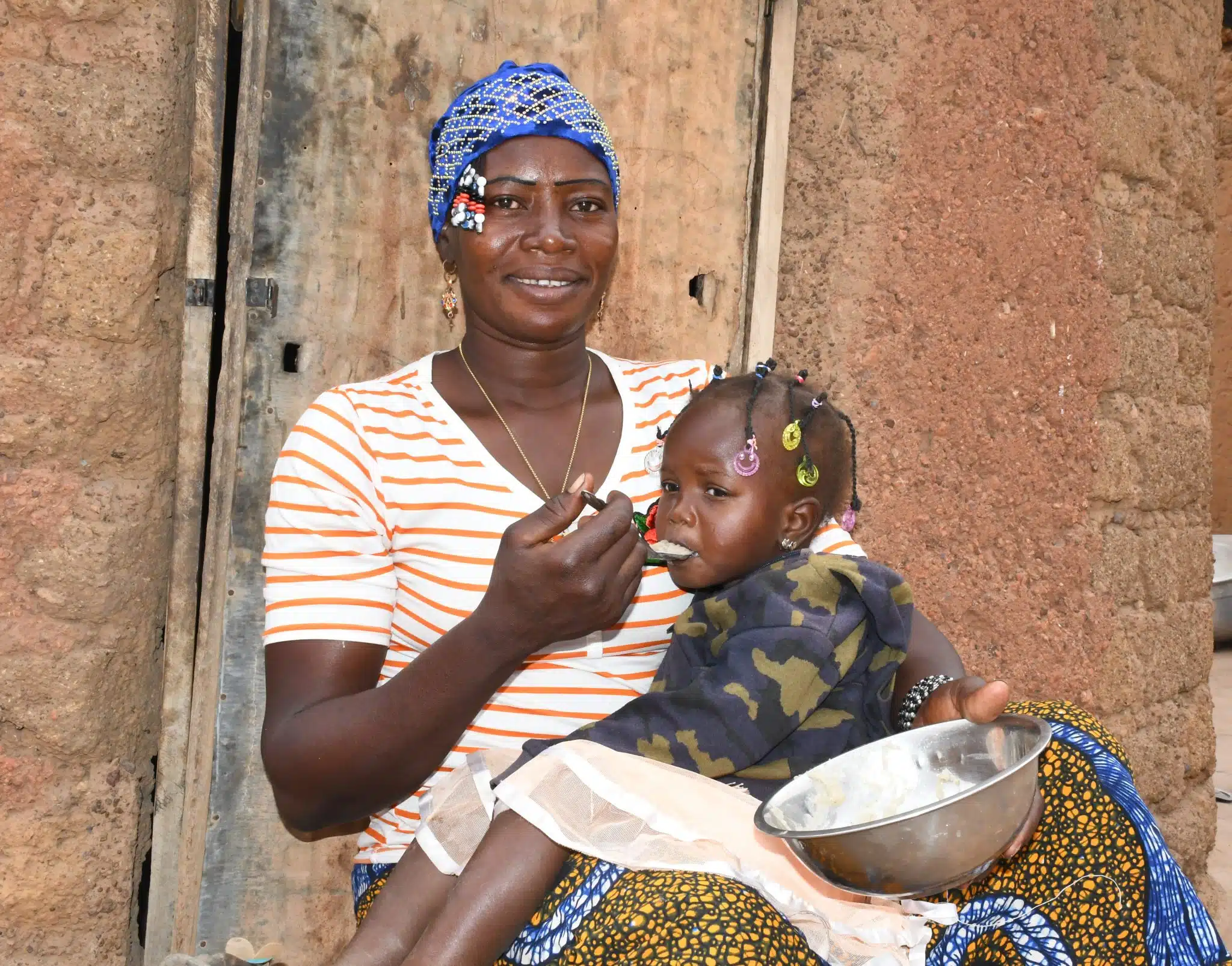
“I am Ramata BADINI, mother of 05 children, my last daughter is 02 and a half years old. The arrival of the RESICOM project in our village (Minima) has changed my living conditions on several levels. Through the ANJE activities, I learned about mother and child hygiene, and how to prepare enriched porridge using flour made from locally available products (small millet, cowpeas, groundnuts, soumbala, moringa powder, etc.). Also, to enable me to vary and improve the nutritional quality of the family meal, I benefit from a plot in the nutritious garden set up by the project. It contains a variety of trees and vegetables with high nutritional potential (baobab, moringa, tomato, cowpea, etc.). This nutritional knowledge has enabled me to change my eating habits for the well-being of my family. Before, due to a lack of knowledge of good hygiene and eating habits, my first 04 babies were regularly ill. I didn’t have enough milk and fed them the same meals as the adults. Since applying the recommended good practices of ANJE, my 02-year-old daughter has been doing well (since the age of 06 months, I’ve been giving her the enriched porridge 03 times a day). In addition to my knowledge of ANJE, I benefit from a plot of land in the market garden set up by the RESICOM project, and also from an AGR kit that enables me to run a small business selling doughnuts at the village market every 03 days. Every market day, I make a profit of around 6,000 FCFA, which I couldn’t before due to the lack of suitable equipment. Today, thanks to the RESICOM project, I’m an enlightened and fulfilled woman, because I know about good hygiene and food practices that I share with the other women in the village, and I run an income-generating activity that enables me to be financially independent.”


“My name is Cécile SAWADOGO, I’m a community-based health agent at the Niessega CSPS (Gourcy). As part of the RESICOM project, I benefited from capacity-building on good ANJE practices. At the end of the training, which lasted 03 days, the project provided us with kits (including pots, ladles, buckets, sieves, stoves and enriched flour) to demonstrate how to prepare porridge for pregnant women and mothers of children aged 0 to 05. The awareness-raising sessions I do with the women focus on good hygiene practices in the family environment, in the kitchen and in childcare; advice on prenatal consultations, and demonstrations of how to prepare enriched porridge. The awareness-raising sessions on ANJE that we run every Thursday and Friday at the CSPS have enabled the women to learn about the importance of ANJE for their well-being and the health of their children. Many of the women didn’t know how to get enriched flour to feed their children and avoid malnutrition. With our advice, many women have seen their children’s health improve. To give some examples, we had two (02) cases of women who had no milk for their babies but who were able to feed them properly with the enriched porridge.”

“Enriched porridge saved my child. He was seriously ill and I was afraid of losing him. He was hospitalized first in Niessega and then in Gourcy for 19 days with no improvement. It was during his 06-month weighing appointment at the Niessega CSPS that I met ASBC Cécile SAWADOGO, who suggested that I come and take part in the demonstration sessions on the preparation of enriched porridge with the financial support of the RESICOM project. Desperate to see my son’s health improve, I attended the various sessions regularly. I didn’t know that enriched porridge could be made from flour made from pearl millet, groundnuts, cowpeas and dried fish. When I started giving my child the enriched porridge, his health gradually improved. Today, he eats well and feels better,” confides AWA SAWADOGO.

“I’m Philomène PARE, a farmer who benefits from the nutritious garden in the village of Bounou (commune of Yaba). In my garden, I’ve planted baobab and moringa trees and I grow various vegetables (tomatoes, cabbage, lettuce, local eggplant, chilli pepper, etc.) that I use for my family’s consumption. Setting up this garden allows me to vary my meals, without spending money. In addition to this nutritious garden, I produce onions in the market garden perimeter set up by the RESICOM project. The profits from the sale of the onions enable me to support my husband in his family expenses.”
“Contribute to the sustainable strengthening of the resilience of agroforestry households, including that of internally displaced persons (IDPs), affected by the security crisis and climate change in the North, Boucle du Mouhoun and Centre-Nord regions”. This is the main objective of the RESICOM project. This project is financed by the Embassy of Denmark and piloted by the Consortium Solidar Suisse – SOS SAHEL International Burkina Faso in collaboration with the Catholic Organization for Development and Solidarity (OCADES-Dédougou), the Federation of Agricultural Professionals of Burkina (FEPAB-Yatenga) and the Wendkouni Association (Boulsa), local partners. It will run from July 01, 2021 to December 31, 2025.